
Herbal Spell for Sleep: A Witch's Guide to Deep Rest and Dream Magic
Updated
It's past midnight and your mind is still running through tomorrow's list, last week's conversation, that thing you said three years ago. You're exhausted but wired, tired but unable to land. If this sounds familiar, you're not alone. The CDC estimates that one in three adults in the United States doesn't get enough sleep regularly, and that number is almost certainly higher among people carrying the particular weight of living in a world that rewards being constantly switched on. An herbal spell for sleep won't fix everything. But it will give your nervous system a signal it understands: it's time to come down now. Tonight is for rest.
Why Witches Have Always Known That Sleep Is Sacred
Long before sleep hygiene became a wellness buzzword, witches, herbalists, and folk healers understood that the hours between dusk and dawn were not empty time. They were portal time. The dreaming mind was considered more permeable, more receptive to guidance, and more capable of processing what the waking mind couldn't hold.
Mugwort was hung above beds across medieval Europe to encourage prophetic dreams. Lavender was strewn on pillows in Elizabethan households for calm and protection. Valerian root, known in some traditions as "all-heal," was used for centuries to quiet an overactive mind before sleep. These weren't random folk superstitions. They were the accumulated wisdom of people who paid close attention to how plants interact with the human body and spirit.
Herbal spells for sleep sit at that exact intersection, using botanical allies for their physical properties (nervine, sedative, anxiolytic) while also engaging the ritual layer: intention, breath, and the act of consciously crossing the threshold from waking to dreaming.
The Herbs That Actually Work for Sleep Magic
Not all sleep herbs are created equal. Some support deep physical rest. Others work on the dream layer specifically. Most good sleep blends use both.
Here are the core botanical allies to know:
Mugwort (Artemisia vulgaris). The dream herb. Associated with the moon, intuition, and the subconscious. Mild sedative properties, but its real power is in enhancing dream vividness and recall. Use sparingly as it's potent, and avoid during pregnancy.
Lavender (Lavandula angustifolia). The nervous system's best friend. Clinical studies have found that lavender aromatherapy measurably reduces anxiety and improves sleep quality. Gentle enough for nightly use in any form.
Valerian root (Valeriana officinalis). The heavy lifter. Valerian has been shown in multiple studies to reduce the time it takes to fall asleep and improve overall sleep quality. The smell is earthy and strong, which is why it's usually paired with lavender.
Chamomile (Matricaria chamomilla). Gentle, warm, and deeply calming. Apigenin, a compound in chamomile, binds to the same brain receptors as some anti-anxiety medications, just much more gently. Ideal for anxious or overthinking minds.
Passionflower (Passiflora incarnata). Less well known but remarkably effective for sleep that's disrupted by a racing mind. Several small clinical trials have found it comparable to low-dose sedatives for generalised anxiety-related insomnia.
Rose petals. More heart than head. Rose supports emotional processing during sleep and brings a protective, loving quality to dream work. Useful during emotionally heavy moon phases or around Samhain when the veil is thin.
You don't need all of these. Two or three herbs chosen with intention will always outperform a scattered handful chosen without it.
Choosing Your Form: Tea, Sachet, or Smoke Bundle
The same herbs can be worked with in several different ways, and the right form depends on what kind of sleeper you are and what kind of practice feels natural to you.
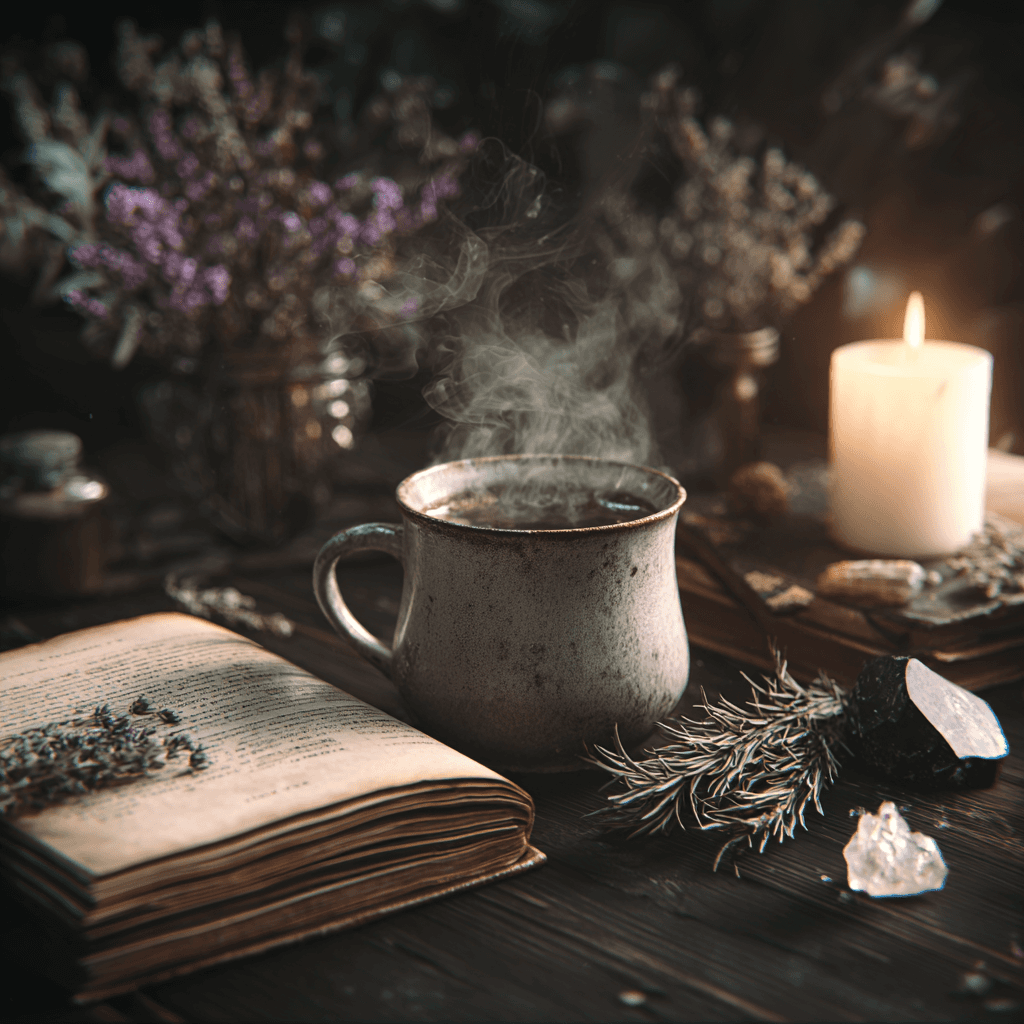
Herbal sleep tea is the most accessible entry point. You're already doing something before bed, so you swap a screen for a warm cup and a small ritual. The act of making tea slowly, inhaling the steam, and drinking it with intention is itself a spell. Use dried lavender, chamomile, and a pinch of passionflower for a gentle nightly blend.
A dream sachet (sometimes called a pillow charm or sleep bundle) is the oldest form of herbal sleep magic. You fill a small cloth bag with dried herbs and tuck it inside your pillowcase or beside your bed. Mugwort and rose petals work beautifully here. The warmth of your body activates the volatile oils slowly through the night.
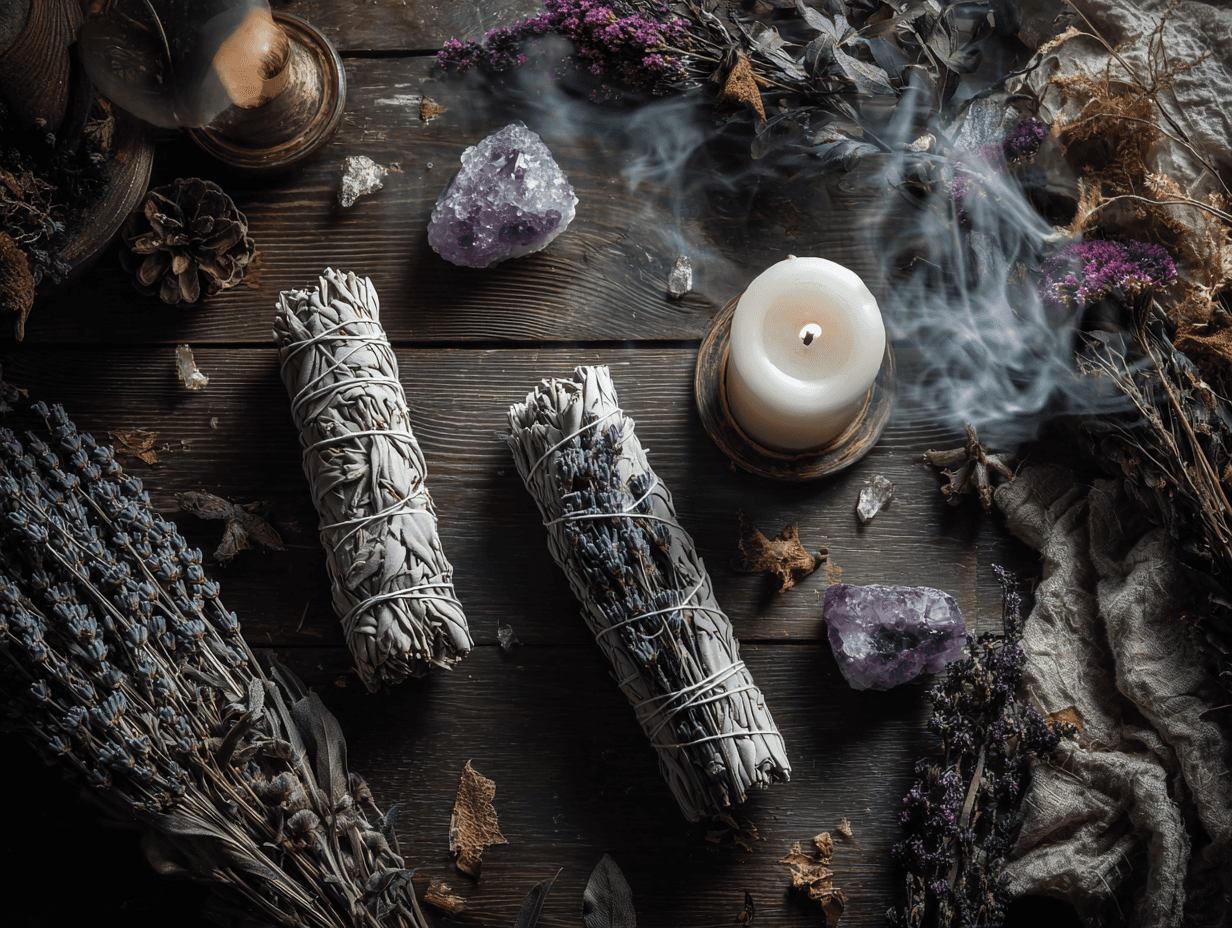
A smoke bundle or loose incense burned briefly before sleep can shift the energy of a room quickly. Use lavender and rosemary to cleanse first, then mugwort alone to open the dream space. Keep it short, maybe five minutes, and extinguish fully before sleeping.
The Herbal Sleep Spell: Step by Step
This spell combines a sleep tea with a simple spoken intention and a brief candle ritual. It takes about fifteen minutes and is most powerful performed during the waning moon, when the energy naturally supports release and rest.
You will need: dried lavender, dried chamomile, a pinch of valerian root, a small blue or white candle, a mug, and hot water.
Prepare your space. Dim the lights. Put your phone in another room or face down across the room. This is the physical act of crossing into rest-time.
Measure your herbs into a strainer or teapot. One teaspoon of lavender, one teaspoon of chamomile, half a teaspoon of valerian. As you add each herb, say its name quietly and what you're calling on it for: "Lavender, for calm. Chamomile, for ease. Valerian, for depth."
Pour the hot water and let it steep for five minutes. While it steeps, light your candle and sit quietly. Breathe slowly. Let the steam carry the scent into the room.
Hold the mug in both hands. Close your eyes and set your intention clearly: "I release the day. I welcome rest. My mind is quiet and my body is safe." Say it once, mean it.
Drink slowly. No screens. No reading. Just the warmth of the cup, the smell of the herbs, and the gradual settling of your body. This is the spell working.
When the mug is empty, blow out the candle. As the smoke rises, imagine it carrying the last of the day's tension with it. Watch it disperse. Let that be enough.
Go to bed within twenty minutes. The herbs need time to work but not long. Keep your bedroom cool and dark. If you've added mugwort to a sachet under your pillow, set a dream intention as you close your eyes: a question, a place, a person you want to visit.
In the morning, write down whatever you remember from your dreams before you do anything else. Over time, this practice builds a relationship with your dreaming mind that deepens the spell each night you repeat it.
Adapting the Spell to the Lunar Cycle and Seasons
Like all magical work, this herbal spell for sleep doesn't exist in isolation. It shifts with the moon and the wheel of the year.
During the waning moon, the spell is most effective for releasing insomnia patterns, anxious thought loops, or grief that's keeping you awake. Write what you want to release on a small piece of paper and burn it safely before the ritual, then follow with the tea.
During the new moon, lean into the intention-setting aspect. What kind of dreamer do you want to become this cycle? What would it feel like to wake rested every morning? Hold that vision as you drink.
The dark months between Samhain and Imbolc are naturally dream-rich. Your sleep practice will deepen during this period without much extra effort. Lean in. Let yourself sleep longer, dream more, and record what arrives.
In summer, around Litha, sleep can be lighter and more disrupted by the long light. Valerian becomes more useful then, and cooling herbs like mint added to your blend can help bridge the seasonal shift.
If you're building a broader evening ritual around this spell, the witch morning routine guide is the natural companion, covering how to close and open the day as a complete practice.
For deeper work with the dreaming mind during potent lunar windows, the new moon ritual for beginners gives you a framework for setting dream intentions at the start of each cycle.
FAQ
What herbs are best for a sleep spell?
Lavender, chamomile, mugwort, valerian root, and passionflower are the most reliable botanical allies for sleep magic. Lavender and chamomile are gentle enough for nightly use. Valerian and passionflower are stronger and better for persistent insomnia. Mugwort is specifically for dream work and should be used in smaller amounts. Choose two or three based on whether you need physical relaxation, mental quieting, or dream enhancement.
When is the best time to do a herbal sleep spell?
The waning moon phase is traditionally the most supportive time, as its energy aligns with releasing tension and winding down. That said, a sleep spell performed with genuine intention on any night will be effective. If you're dealing with acute insomnia, don't wait for the right moon phase. Start tonight and refine the practice over time.
Is mugwort safe to use in a sleep spell?
Mugwort is safe for most adults in small amounts used occasionally. It should be avoided entirely during pregnancy as it can stimulate the uterus. People with ragweed allergies may also react to it. As a smoke herb, use it in a well-ventilated room and limit exposure to a few minutes. As a dream sachet, the amounts involved are very small and generally well tolerated.
Can I do a herbal sleep spell every night?
Yes, with some adjustments. Lavender, chamomile, and rose are gentle enough for nightly use indefinitely. Valerian is best used in cycles, a few weeks on, a week off, to maintain effectiveness. Mugwort is most powerful used once or twice a week rather than nightly. The candle ritual and intention-setting can absolutely become a nightly practice and will deepen the more consistently you do it.
Do I need to believe in magic for a herbal sleep spell to work?
No. The herbs carry genuine pharmacological properties that work regardless of belief. Lavender reduces cortisol. Chamomile binds to GABA receptors. Valerian supports sleep onset. The ritual layer, the intention, the breathing, the slowing down, adds a nervous system regulation component that also works independently of belief. What the magical framework does is make the whole practice more meaningful and therefore more likely to be maintained. Consistency is where the real magic lives.
Sleep is not the absence of magic. It's where some of the deepest work happens, the processing, the dreaming, the quiet rebuilding of a self worn thin by waking life. An herbal spell for sleep is simply a way of crossing that threshold with care, giving your body and your dreaming mind everything they need to do their work.
Save this for your next waning moon night, brew the tea slowly, and let yourself finally rest.
Comments
Current Moon Phase
Latest Articles
A Cooling Crystal Grid for Hot Summer Nights
Three stones, a simple layout, and five minutes of quiet. A crystal grid for when the heat won't let you sleep and your nervous system needs the reminder that calm is possible.

How to Build a Daily Witchy Practice in 10 Minutes
A real, sustainable daily practice for people with full lives. Ten minutes. Five elements. No altar required, no expensive tools, no perfection.

The Midsummer Fire Spell: A 4-Element Ritual for the Longest Day
A complete Litha ritual using the four elements — earth, water, air, and fire — for morning, noon, late afternoon, and sunset of the summer solstice.

A Sun-Charged Water Spell for the Longest Day
A simple, five-minute practice for the summer solstice. Charge a jar of water in the longest light of the year, then use it all summer long.
3 Herbs to Work With at the Summer Solstice
Three herbs that peak at midsummer, what they're for, and how to use them in the week of the longest day.
Wheel of the Year
Written by
Elyse