New Moon Intentions: A Specific, Honest Practice
Updated

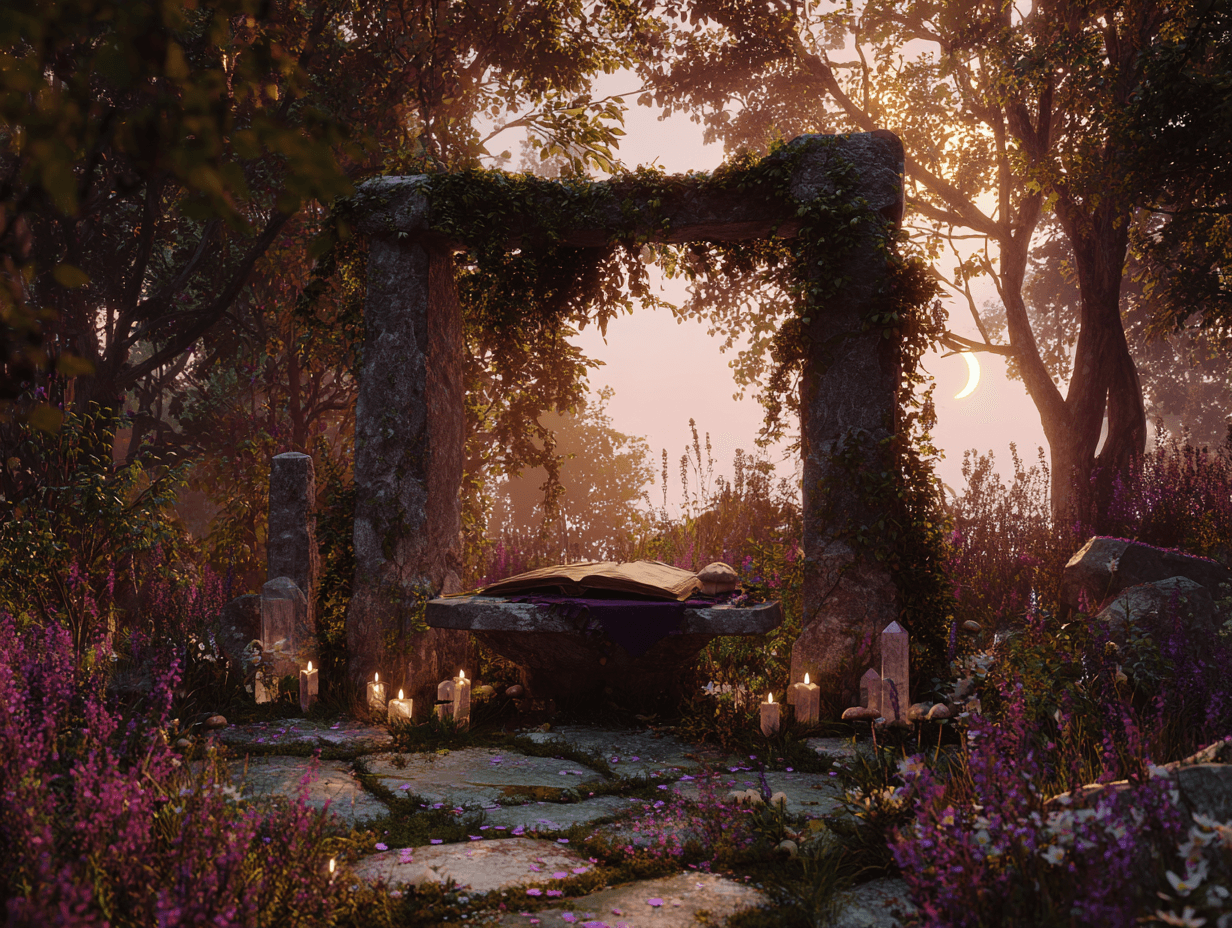
The new moon is the dark of the month. The sky is clear. The moon is invisible. In most modern witchcraft, this is the moment to set an intention — not because the moon grants wishes, but because the cycle is a useful anchor for the work of starting something new.
You don't have to wait for a new moon to start something. You can start on a Tuesday. You can start right now. The new moon is one anchor among many. Some people find it useful. Some people don't. This is for the ones who do.
What a new moon intention is, in case the word has gotten too big
An intention is a specific, time-bounded commitment to a specific action. That's it. The word "intention" has gotten layered with magic-thinking — manifestation, energy, the universe, alignment. Strip all that. An intention is "I will do this specific thing in this specific time." That's the whole thing.
"I will walk 20 minutes every morning for the next month" is an intention. "I will manifest abundance" is not. The first is a thing you can act on. The second is a thing you can feel. The first is the work. The second is the dream. Both are real. Only one is a new moon intention.
The five-step practice
Step 1: pick the thing
Before you do any ritual, before you light any candle, before you write any sentence, pick one specific thing you want to do in the next month.
Not a category. Not a theme. A specific, measurable action. "I will wake up at 7am on weekdays." "I will call my mother every Sunday." "I will write 500 words a day, six days a week." "I will not look at my phone for the first hour after I wake up." "I will take a real lunch break three days a week."
The action should be small enough that you can actually do it for a month, and specific enough that you'll know if you've done it. If you can't tell whether you did the thing, it's not specific enough yet.
Common mistakes to avoid: making it too big (you will fail by day 5 and feel bad), making it too vague (you'll forget what it was by day 10), making it punitive (this is supposed to be a practice, not a punishment).
Step 2: write it down, in your own handwriting
Pen. Paper. Your handwriting. Don't type it. Don't say it into a voice memo. Don't post it on Instagram. The act of writing is part of the practice — it engages the body, not just the head, and the act of holding the paper afterwards is a small but real anchor.
Write the action as a statement in the present tense, as if it's already happening. "I am a person who walks 20 minutes every morning." Not "I want to" or "I'm going to try to." The present tense is a small but real piece of the work — it makes the action something you do, not something you might do.
Below the statement, write down the first three steps. The first thing you'll do. The second thing. The third thing. The first step should be something you can do in the next 24 hours. The whole point of the practice is to make the intention a real thing, not a wish.
What to do with the paper: put it somewhere you will see it. On your fridge, by your bed, on your desk. The seeing is the reminder. The reminder is part of the work.
Step 3: light a candle (if you want)
A candle is not required. A candle is not magic. A candle is a small ritual object that marks the moment — it says "this is the start of something." Most people find the moment of lighting to be a real moment, in the way that a New Year's toast is a real moment even though January 1st is just another day.
If you want a candle, light one. Any candle. Any color. A birthday candle on a saucer is fine. A tealight on the kitchen counter is fine. A beeswax taper in a holder is fine. The candle is for the moment. The moment is for you.
If you don't want a candle, don't light one. The work is in the writing and the doing, not in the candle.
Safety note: don't leave a candle burning unattended. If you're using essential oils, don't use them in a poorly-ventilated room. Most new moon rituals are short — five to fifteen minutes. The candle can be out before you move on.
Step 4: do the first small step
This is the step most people skip. They write the intention, light the candle, say a sentence, and then they wait. The waiting is the failure. The practice is the first step.
Take the first step. Today. Now. Whatever it is. If your intention is about mornings, set your alarm for tomorrow morning before you blow out the candle. If it's about walking, put your shoes by the door. If it's about the Sunday call, put your mother's number in your phone's favorites now. The first step is the smallest concrete thing that moves the intention from paper to life.
Most people find that once they've done the first step, the second step is easier. The hardest part is the moment between writing the intention and acting on it. The candle helps mark that moment. The first step is what closes the gap.
Step 5: revisit at the full moon
Two weeks from your new moon intention, the moon will be full. That's your mid-cycle check-in. Look at the paper. Look at the first three steps. Ask: have I done any of them? If yes, what's the next one? If no, what got in the way? Don't judge. Just look.
The full moon is the moment to refine, not to give up. Most people abandon new moon intentions before the full moon, because the novelty is gone and the result is far away. Don't. Just check in. The check-in is the work of the full moon.
Most intentions need adjustment by the full moon. The action that felt right on the dark of the moon might feel wrong by the waxing gibbous. That's fine. The paper is a starting point, not a contract. You can adjust the action. You can change the action. You can keep going. The check-in is for honest reflection, not for self-punishment.
What this practice is and isn't
This is a structure for setting an intention and following through on it. The structure uses the lunar cycle because some people find the cycle a useful anchor. The candle is a marker. The writing is a way of making the intention real. The first step is the practice.
It is not magic that bends reality. The moon is not going to grant your wish. The candle is not going to carry your intention. The universe is not going to align with you. The work is the work. The structure is the way you hold the work.
You can do this practice every month, on the new moon. You can do it on the first of the month instead. You can do it on your birthday. You can do it on a Tuesday. The anchor is whatever helps you show up. The showing up is the whole point.
Pick one intention. Do the five steps. Show up for the first step. That's the practice. The rest is just talk.
For a daily practice that holds the new moon intention, the ten-minute daily practice gives you a small morning framework to come back to.
For working with the moon phases throughout the year, the moon phases guide walks through all eight phases in plain language.
Comments
Current Moon Phase
Latest Articles

A Cooling Crystal Grid for Hot Summer Nights
Three stones, a simple layout, and five minutes of quiet. A crystal grid for when the heat won't let you sleep and your nervous system needs the reminder that calm is possible.

How to Build a Daily Witchy Practice in 10 Minutes
A real, sustainable daily practice for people with full lives. Ten minutes. Five elements. No altar required, no expensive tools, no perfection.

The Midsummer Fire Spell: A 4-Element Ritual for the Longest Day
A complete Litha ritual using the four elements — earth, water, air, and fire — for morning, noon, late afternoon, and sunset of the summer solstice.

A Sun-Charged Water Spell for the Longest Day
A simple, five-minute practice for the summer solstice. Charge a jar of water in the longest light of the year, then use it all summer long.
3 Herbs to Work With at the Summer Solstice
Three herbs that peak at midsummer, what they're for, and how to use them in the week of the longest day.
Wheel of the Year

Written by
Elyse