
5 Essential Oil Blends for Real Situations: A Practical Guide
Updated
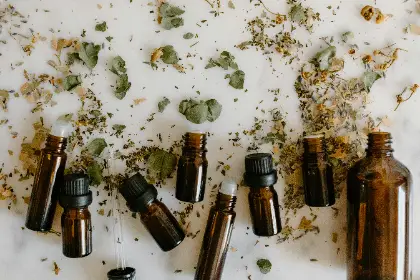
Essential oils are some of the most useful tools in a modern witchcraft practice. They're also one of the easiest things to oversell. Some of the claims out there are real (lavender does help with sleep — that's backed by research). Some are not (most "this oil cures this disease" claims are not). The split isn't always obvious from the marketing.
This is a list of five blends for real situations. Each one has a specific recipe, a specific use, and a specific safety note. None of them are magic bullets. All of them are useful, when used correctly.
Two things before you start
One: essential oils are concentrated. A few drops is the dose. More is not better — it's a skin irritant. When in doubt, dilute more, not less.
Two: most essential oils shouldn't be applied directly to skin without a carrier oil. A 2% dilution (about 12 drops per fluid ounce of carrier) is the standard safe ratio for adult skin. Jojoba, sweet almond, fractionated coconut, and olive oil all work as carriers. For children, pregnant people, and pets, the rules are stricter — check before you blend.
The five blends
1. The "I can't sleep" blend
For nights when your body is tired but your mind is doing laps. Diffuse, or dilute and apply to the soles of the feet or the back of the neck.
3 drops lavender
2 drops cedarwood
1 drop vetiver
Add to 1 tablespoon carrier oil for a roller or to a diffuser with water. The cedarwood is the sleeper hit here — it has a real sedative effect, especially for restless thoughts. Lavender is the famous one. Vetiver is the deep one. Together they're a tired-evening trifecta.
Safety: cedarwood is generally well-tolerated. Vetiver is a base note — a little goes a long way. Don't use more than the recipe says.
2. The "I'm wound too tight" blend
For shoulders that are up around your ears. For breath that's been shallow all day. Diffuse, or dilute and apply to the chest or the wrists.
3 drops bergamot
2 drops frankincense
2 drops geranium
Bergamot is one of the most-studied oils for anxiety — there are clinical trials showing it lowers cortisol. The drawback: it's a citrus oil, which means it's phototoxic. If you put it on your skin and then go into the sun, you can get a real burn. Diffuse instead, or apply at night only.
Safety: phototoxicity is real. Don't apply before sun exposure. Don't use during pregnancy without checking.
3. The "I need to focus" blend
For the second hour of a long task. For the kind of work where your brain keeps leaving the room. Diffuse while you work, or dilute and apply to the temples (avoiding the eye area).
3 drops rosemary
2 drops peppermint
1 drop basil
Rosemary is the underrated one. There's research showing it improves memory and cognitive performance in older adults, and the effect holds for younger ones too. Peppermint is the wakeful one. Basil is the clear-headed one. Together they're a working-brained combination that doesn't feel amped up the way coffee does.
Safety: peppermint can be intense for some people. Start with 1 drop if you're sensitive. Don't apply near the face of an infant or young child.
4. The "I have a headache" blend
For the low-grade tension headache that's been there all day. For the kind that gets worse with screen time. Dilute and apply to the temples and the base of the skull. Don't apply near the eyes.
3 drops peppermint
3 drops lavender
2 drops frankincense
This is the standard aromatherapy headache blend, with good reason. Peppermint and lavender both have data supporting their use for tension headaches. Frankincense is the calmer of the three. The combination works best when the headache is muscular (neck, shoulders) rather than migraine — for migraines, see a doctor.
Safety: not a substitute for medical care. If you have recurring severe headaches, please see a doctor.
5. The "I worked out too hard" blend
For the day after the long run, the hard yoga class, the moving-day haul. Dilute (2-3% — slightly stronger than the others) and massage into the sore muscles. Or add a few drops to a hot bath with Epsom salts.
4 drops eucalyptus
3 drops peppermint
2 drops black pepper
2 drops marjoram
Eucalyptus and peppermint are the circulation-stimulators. Black pepper is the deep-warming one. Marjoram is the muscle-relaxing one. The combination works because it both warms the tissue (pepper, eucalyptus) and tells the muscle to let go (marjoram). Add a tablespoon of carrier oil and massage in slowly.
Safety: marjoram and black pepper can be intense on sensitive skin. Test a small area first. Don't use on broken skin.
How to store them
Most essential oil blends last 3-6 months in a dark glass bottle, away from direct sunlight and heat. If the oil starts to smell off (sharp, sour, or just different from when you made it), it's gone past. Make a fresh batch.
Label the bottle with the date and the recipe. A year from now, you will not remember.
What these blends are and aren't
These blends are not magic spells. They don't "carry intention" any more than a cup of tea or a piece of bread does. They are plant-based preparations with specific physiological effects, and they are useful precisely because the effects are real.
You can absolutely use them in ritual. You can light a candle while you diffuse them and say something true about your day. The plant work and the ritual work don't have to be different things. The oil will do the oil work whether or not the candle is lit. The candle and the words do the candle-and-words work. Both can be in the same room.
You don't have to choose. You don't have to disbelieve one to use the other. The plant doesn't need you to believe in it. The practice doesn't need the plant to be magic. Both can be true at the same time.
For a daily practice that holds the herbal and ritual work, the ten-minute daily practice gives you a small morning framework to come back to.
For working with herbs more broadly, the seven herbs for anxiety and sleep walks through the most useful plants in plain language.
Comments
Current Moon Phase
Latest Articles
A Cooling Crystal Grid for Hot Summer Nights
Three stones, a simple layout, and five minutes of quiet. A crystal grid for when the heat won't let you sleep and your nervous system needs the reminder that calm is possible.

How to Build a Daily Witchy Practice in 10 Minutes
A real, sustainable daily practice for people with full lives. Ten minutes. Five elements. No altar required, no expensive tools, no perfection.

The Midsummer Fire Spell: A 4-Element Ritual for the Longest Day
A complete Litha ritual using the four elements — earth, water, air, and fire — for morning, noon, late afternoon, and sunset of the summer solstice.

A Sun-Charged Water Spell for the Longest Day
A simple, five-minute practice for the summer solstice. Charge a jar of water in the longest light of the year, then use it all summer long.
3 Herbs to Work With at the Summer Solstice
Three herbs that peak at midsummer, what they're for, and how to use them in the week of the longest day.
Wheel of the Year

Written by
Elyse