
Herbal Magic: 7 Herbs to Calm Anxiety and Help You Sleep
Updated
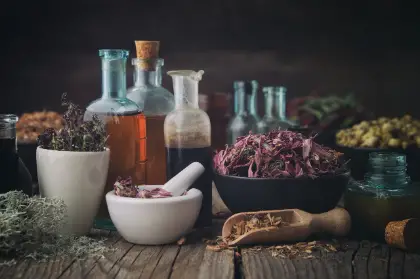
Herbs are some of the most useful tools in the modern witchcraft practice. They are also some of the most mis-marketed.
On one side, the wellness industry sells herbs like magic bullets. On the other, the witchcraft community sometimes treats herbs as ritual objects with no real physical effect. The truth is in the middle: herbs are plants that do specific things in the body, that have been used for centuries for those specific things, and that work in the same way a cup of coffee works (which is also a plant).
This is a list of seven plants that genuinely help with anxiety and sleep. Not as a substitute for medical care. As part of a real, layered practice that includes rest, movement, food, and the actual hard work of living.
Before you start: two important notes
Herbs are not a substitute for therapy or medication. If you're dealing with chronic anxiety, ongoing insomnia, or any other persistent issue, please work with a doctor. Herbs can support the work. They can't replace it.
Herbs interact with medications. Many of the plants on this list interact with SSRIs, anti-anxiety medications, sleep medications, and blood thinners. If you're on any of these, talk to your doctor or pharmacist before adding herbs. St. John's Wort is the most common offender; ashwagandha can interact with thyroid medication; chamomile can interact with blood thinners.
Both of these are basic safety notes. Both are part of working with plants responsibly.
The seven herbs
1. Lavender — the calm one
What it does: lavender has been studied for anxiety and sleep. The research is real. A 2010 study showed lavender aromatherapy reduced anxiety in dental patients. A 2012 study showed it improved sleep quality in older adults with insomnia. A 2014 meta-analysis found modest but consistent benefits for anxiety symptoms.
How to use it: as essential oil in a diffuser (a few drops in water), as a tea (1-2 tsp dried buds in hot water, steep 10 minutes), as a sachet under your pillow, as a small sprig tied to your bed frame. The essential oil is concentrated — use 2-3 drops, not more.
Safety: generally very safe. Don't ingest the essential oil. Pregnant people should use it in moderation.
2. Chamomile — the soft one
What it does: chamomile (specifically German chamomile) has been used for centuries as a calming tea. Modern research has confirmed modest benefits for generalized anxiety and sleep quality. The effects are gentler than lavender, and the taste is more pleasant for most people.
How to use it: as a tea (1-2 tsp dried flowers in hot water, steep 5-10 minutes, strain). It's a good evening tea. The dose of "two mugs before bed" is a real folk use that's backed by the data.
Safety: very safe for most adults. Can interact with blood thinners (warfarin specifically). People allergic to ragweed may react to chamomile — it's in the same plant family.
3. Lemon balm — the mood one
What it does: lemon balm (Melissa officinalis) has been studied for anxiety, mood, and cognitive function. The effects are real but mild — it's not a heavy hitter, it's a steady one. Most useful when combined with other herbs (especially valerian and chamomile) in a calming blend.
How to use it: as a tea (1-2 tsp dried leaves in hot water, steep 10 minutes), as a tincture (follow the bottle's dosing), or as fresh leaves in cold water for a subtle, lemon-scented drink. The fresh plant grows easily in a pot on a windowsill.
Safety: very safe. Long history of culinary use. No major interactions.
4. Passionflower — the sleep one
What it does: passionflower (Passiflora incarnata) is a stronger herb for sleep than chamomile or lavender. Several studies have found it comparable to low-dose oxazepam for generalized anxiety disorder, with fewer side effects. The mechanism isn't fully understood, but the GABA modulation is the working theory.
How to use it: as a tea (1-2 tsp dried leaves in hot water, steep 10-15 minutes), as a tincture, or in capsule form. The tea is more effective for sleep onset; the tincture is more effective for anxiety during the day. Take 30-60 minutes before bed for sleep.
Safety: generally safe. Don't combine with prescription sleep medications without doctor supervision (the effect stacks). Not for use during pregnancy.
5. Valerian — the strong one
What it does: valerian (Valeriana officinalis) is one of the most studied herbs for sleep. The research is mixed — some studies show meaningful improvement, others show little effect. The honest summary: it works for some people and not others. If you've tried chamomile and lemon balm and they weren't enough, valerian is the next step. It's the strongest non-prescription herbal option for sleep.
How to use it: as a tea (1-2 tsp dried root in hot water, steep 10-15 minutes — the smell is strong; many people take it as a capsule or tincture instead), as a tincture (follow bottle dosing), or in capsule form. Take 30-60 minutes before bed.
Safety: safe for most adults. Some people find it causes vivid dreams. Don't combine with prescription sleep medications or alcohol. Long-term safety data is limited — use it for a few weeks at a time, not for years straight.
6. Ashwagandha — the cortisol one
What it does: ashwagandha (Withania somnifera) is an Ayurvedic herb that's been studied extensively for stress and cortisol. Multiple randomized controlled trials have found it reduces cortisol levels and perceived stress in chronically stressed adults. The effect size is moderate but real. It's the most clinically-supported herb on this list for anxiety specifically.
How to use it: as a capsule (300-600mg standardized extract, taken once or twice daily), as a powder mixed into warm milk (plant milk works) with honey, or as a tincture. The capsule is the most consistent dose.
Safety: generally safe, but interacts with thyroid medication (can over-stimulate), immunosuppressants, and blood sugar-lowering drugs. Pregnant people should not use it. Some people find it too stimulating if taken in the evening — morning dosing is often better.
7. Mugwort — the dream one
What it does: mugwort (Artemisia vulgaris) is a bit different from the others on this list. It's not primarily a calming herb — it's a dream herb. People have used it for centuries to encourage vivid, lucid, or meaningful dreams. The tradition is old; the modern research is sparse but interesting.
How to use it: as a tea before bed (a small amount — it's strong, slightly bitter), as a sachet under the pillow, or as a smudge burned in the room before sleep. The sachet is the gentlest way in.
Safety: generally safe in small amounts. The thujone content means large amounts over time are not recommended. Pregnant people should avoid it (it's a traditional uterine stimulant). People with ragweed allergies may react.
How to start (the simple version)
Pick one. Don't start all seven at once. The plant-medicine tradition has a saying: start low, go slow, pay attention. The same applies to witchcraft.
If sleep is the issue, start with chamomile tea in the evening, an hour before bed. Do that for a week. If it's not enough, add lemon balm or passionflower. If that's not enough, consider valerian.
If anxiety is the issue, start with lavender aromatherapy or a small amount of lemon balm. If that's not enough, consider ashwagandha (with doctor awareness if you're on medication).
Don't overcomplicate it. One herb, one week, paying attention. That's a practice.
The spell part
You can use these herbs in ritual, in spell work, in moon rituals. The plants are the same plants; the practice is the practice.
When you brew a cup of chamomile before bed and say this is for rest, this is for the work my body needs tonight — that's a spell. When you hold a mug of lemon balm tea and say this is for the version of me that isn't afraid of tomorrow — that's a spell. The plant is doing the plant work. Your attention is doing the rest.
The plant doesn't need to believe in the spell. The spell doesn't need the plant to believe. Both can be in the same cup.
For the sleep spell that uses some of these herbs, the herbal spell for sleep walks through a specific bedtime ritual.
For the daily practice that holds the herbal work, the ten-minute daily practice gives you a small morning framework to come back to.
Comments
Current Moon Phase
Latest Articles
A Cooling Crystal Grid for Hot Summer Nights
Three stones, a simple layout, and five minutes of quiet. A crystal grid for when the heat won't let you sleep and your nervous system needs the reminder that calm is possible.

How to Build a Daily Witchy Practice in 10 Minutes
A real, sustainable daily practice for people with full lives. Ten minutes. Five elements. No altar required, no expensive tools, no perfection.

The Midsummer Fire Spell: A 4-Element Ritual for the Longest Day
A complete Litha ritual using the four elements — earth, water, air, and fire — for morning, noon, late afternoon, and sunset of the summer solstice.

A Sun-Charged Water Spell for the Longest Day
A simple, five-minute practice for the summer solstice. Charge a jar of water in the longest light of the year, then use it all summer long.
3 Herbs to Work With at the Summer Solstice
Three herbs that peak at midsummer, what they're for, and how to use them in the week of the longest day.
Wheel of the Year
Written by
Elyse