Forest Bathing: A Simple Practice for When Your Nervous System Needs the Woods
Updated
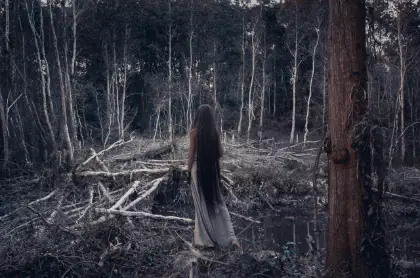
Forest bathing is a Japanese practice called shinrin-yoku, and it has almost nothing to do with water.
The original idea, coined in the 1980s by the Japanese Forest Agency, was simple: spend time in a forest, on purpose, using your senses. Not to exercise. Not to hike. Not to push for a summit. Just to be in the woods and notice them.
It sounds like a small thing. It's actually a different relationship with being outside. Most of us, when we go into nature, are doing something in it. Walking. Running. Photographing. Forest bathing is the practice of being somewhere without doing anything in it.
What forest bathing actually is
You walk into a forested area. Any size. A national park is lovely. A tree-filled city park counts. A few oaks at the end of your street counts. You move slowly, or you sit. You let your senses land on things. The feel of bark. The sound of wind. The way light comes through leaves. The smell of damp earth after rain.
That's the whole practice. There isn't more to it.
You don't need a guide, a certification, or an app. You don't need to drive somewhere. You need twenty unhurried minutes in a place with trees, and a willingness to stop performing productivity for a moment.
What the research says (the short version)
The Japanese government funded a major research program on shinrin-yoku in the 2000s, led by Dr. Qing Li. The findings that get cited most:
Cortisol drops. Time in forests measurably lowers cortisol — the stress hormone — in study participants, often within twenty minutes.
Blood pressure drops. Even brief exposure in walking studies showed reductions in both systolic and diastolic pressure.
Immune markers improve. Trees release airborne compounds called phytoncides. When you breathe them in, your body produces more natural killer (NK) cells — the white blood cells that fight viral infection and abnormal cells. The effect lasts for about a week after a single forest visit.
Sleep improves. People who do regular forest bathing report better sleep quality over time.
Mood improves. Reduced symptoms of depression and anxiety in multiple studies. The effect is stronger for people who are already under stress.
These are not magical claims. They are measurable, real-world effects of slowing down, breathing clean air, and being in a place where your body isn't being asked to do anything.
A simple practice for this week
If you have twenty minutes and a patch of trees, this is enough.
Step one: arrive. Walk to your trees. Stand at the edge for a moment. Notice your body. Notice your breathing. Notice whatever is in your head right now. You don't have to clear it. Just notice it's there.
Step two: land your senses. Pick one sense and let it be the one you lead with. For the first five minutes, just see. Look at bark, at the shape of leaves, at the way light comes through. Don't name what you see. Just look.
Step three: switch senses. After a few minutes of seeing, switch. Now listen. Wind. Birds. The far sound of a car that you let pass through your attention. The sound of your own feet on the ground.
Step four: touch something. At some point, touch a tree. Or the ground. Or moss. The texture of bark under your hand. The cool damp of soil. You're reminding your body that it's a body, in a place, on a planet.
Step five: sit. If you can, find a place to sit for five or ten minutes. A log, a stone, the ground itself. Let your attention drift. Don't try to be calm. Let whatever is in you be in you, in this place.
Step six: close with a small gratitude. When you leave, take one small moment to thank the place. Out loud if you want. The trees have been doing their tree work for a long time. They don't need thanks, but thanking them is a way of marking that you received something.
What to do if you can't get to trees
Real talk: not everyone lives near a forest. If you live in a city, you can still do most of this in a park, a tree-lined street, or a backyard with a single tree. The research is on trees specifically, but the principle — slow, sensory, unhurried time in a green space — works in any green space.
If you have no green space at all, you can use what you have. Houseplants count. Even one. A pot of basil on the windowsill, watered and looked at, is a small green presence your nervous system can register.
The point is not the size of the place. The point is the slowness.
How this fits the practice
Forest bathing isn't a spell. It's not a ritual. It doesn't require candles, herbs, or intention-setting.
What it is, in the language of the practice: a way of remembering that you're a body in a place, and that the place has been here longer than you. Most modern life takes us out of our bodies and into our heads. Forest bathing puts us back.
When you come back from a forest walk, you're not "carrying forest energy." You're carrying the felt sense of having been a body in a quiet place. That felt sense is the thing. It changes how the rest of the day feels. It changes what you notice. It changes how you hold the next hard thing.
You don't have to believe in the magic for it to work. The trees don't need you to.
For a structured daily ritual that pairs with the nervous system reset, the ten-minute daily practice gives you a small morning framework to come back to.
If you want to know what to do when the practice has to fit inside a workday, the witch morning routine walks through how to keep the practice alive in real time.
Comments
Current Moon Phase
Latest Articles

A Cooling Crystal Grid for Hot Summer Nights
Three stones, a simple layout, and five minutes of quiet. A crystal grid for when the heat won't let you sleep and your nervous system needs the reminder that calm is possible.

How to Build a Daily Witchy Practice in 10 Minutes
A real, sustainable daily practice for people with full lives. Ten minutes. Five elements. No altar required, no expensive tools, no perfection.

The Midsummer Fire Spell: A 4-Element Ritual for the Longest Day
A complete Litha ritual using the four elements — earth, water, air, and fire — for morning, noon, late afternoon, and sunset of the summer solstice.

A Sun-Charged Water Spell for the Longest Day
A simple, five-minute practice for the summer solstice. Charge a jar of water in the longest light of the year, then use it all summer long.
3 Herbs to Work With at the Summer Solstice
Three herbs that peak at midsummer, what they're for, and how to use them in the week of the longest day.
Wheel of the Year

Written by
Elyse