
5 Witchcraft Practices for Mental Clarity (Self-Directed Only)
Updated

Mental clarity is one of the most useful things a person can have, and one of the most underrated. Most modern witchcraft has tools for it — clearing rituals, herbal preparations, focus practices — and most of those tools work whether or not you call them magic.
These are five practices I use myself, in some form or another, when my brain is stuck. Each one is self-directed. None of them are about changing someone else, getting someone to do something, or bending anyone's will. The spellwork is for you. The energy is for you. The results are for you. This is the part of witchcraft that doesn't get talked about enough.
You can do these in any order, any day, any time. Most of them take ten minutes or less. The list is not a curriculum. Pick one. The one that sounds least like work. Do that one.
A few things before you start
These practices are not a substitute for therapy, for medication, or for medical care. If your mental clarity is more "I can't function" than "I'm a bit foggy," please work with a doctor or a therapist. The practices can support the work. They can't replace it.
None of these practices are about controlling other people. They are not love spells. They are not "make him call" spells. They are not "hex my ex" spells. Those spells, when they're real, are about manipulating someone else's will, and that's a bad trade — both because the universe doesn't actually cooperate with that kind of magic and because the threefold return principle says the bad you put out comes back threefold. The self-care version of witchcraft is the version that works. It's also the version I want to be part of.
1. The sage-and-salt space clearing
For the days when the air in your home feels heavy. For the days when you walked in the door and something in the room just felt off. For the days when you can't name it but you can feel it.
What you need: a small bundle of dried sage (white sage is traditional; rosemary, mugwort, or cedar are good substitutes), a fireproof container (a small ceramic bowl, a cast-iron pan, anything that can take heat), a pinch of coarse salt, a window you can open.
The practice:
Open the window. Even a crack. The air needs somewhere to go.
Light the sage and let it smolder, not flame. If it flames, blow it out and let the smoke rise.
Walk through the room, slowly. Don't rush. The walking is part of the practice.
When you get to a corner, sprinkle a small pinch of salt there. Just enough. The salt is the marker.
When you get back to where you started, snuff the sage in the fireproof container. Don't blow it out — press it into the salt or the ash.
Five to ten minutes total. The smoke clears the air. The salt marks the corners. The window lets the old air out. The practice is the walking.
Safety note: dried sage burns hot. Use a heat-safe container. Don't leave the smoldering sage unattended. If you have birds, fish, or anyone with serious respiratory issues in the home, skip the burning and use the salt alone — sprinkle a small bowl of coarse salt in the corners and walk through the room carrying a cup of strong rosemary tea. The walking is the practice. The smoke is the bonus.
2. The one-stone meditation
For the days when your mind has 100 tabs open and you need to close 99 of them. For the days when "sitting still" is too much to ask but "sitting with one object" is doable.
What you need: one stone. A clear quartz is traditional because it doesn't have a strong "personality" — but any stone you like is fine. The point is one object you can look at.
The practice:
Sit somewhere you can be still for ten minutes. Anywhere. The floor is fine.
Hold the stone in your hand. Notice its weight. Notice its temperature (most stones feel cool at first, then warm).
Look at the stone. Don't look through it. Don't imagine it's something else. Just look at the actual stone in your actual hand.
When your mind wanders (and it will), notice that it wandered. Come back to the stone. The coming back is the practice.
At the end of ten minutes, put the stone somewhere you can see it. The seeing is the reminder. The reminder is the practice.
What it does: gives the mind one thing to land on, instead of a hundred. The stone is the anchor. The mind learns to come back to the anchor. The mind learns to come back, period. The rest of the day is easier because the practice happened.
3. The lavender-sleep sachet
For the nights when the mind won't stop. For the nights when you go to bed with the day still in your head. For the nights when "I should sleep" doesn't translate into sleep.
What you need: a small cloth bag (a clean cotton drawstring bag, a small handkerchief tied with twine, even a sock you don't use anymore), dried lavender (about a tablespoon), a few drops of lavender essential oil (optional), and optionally a small piece of amethyst, rose quartz, or any stone you want nearby.
The practice:
Fill the bag with the dried lavender. If you're using essential oil, add 2-3 drops to the lavender before putting it in the bag.
Tie the bag closed. Tuck the stone in if you have one, or set the stone on top of the bag.
Hold the sachet in both hands for a moment. Notice the smell. Notice the weight. Notice what your body is feeling right now, before you go to sleep.
Place the sachet under your pillow or on your bedside table.
If you wake in the night, move the sachet to your chest. The smell is a small anchor back to sleep.
What it does: lavender has real, studied calming effects. The sachet is a slow-release version of a cup of tea. Most people who use one notice they fall asleep a few minutes faster and wake less often in the first half of the night. The sachet is the easy version of the practice. The cup of tea is the strong version. Both are real.
How long it lasts: about 3-6 months. After that, the scent fades. Replace the lavender.
4. The new-moon intention paper
For the start of a new cycle. For the days when you want to begin something, even if "begin" looks small. For the days when the question is "what do I actually want to spend the next month doing?"
This is the most "ritual" of the five. It uses the lunar cycle as an anchor. If you don't care about moon cycles, you can do it on the first of the month, on a Sunday, or on any day that feels like a new day. The anchor is whatever helps you show up.
What you need: a piece of paper, a pen, a candle (any kind, optional but traditional).
The practice:
Write down one specific thing you want to do in the next month. Not a category. A specific action. "I will wake up at 7am." "I will take a real lunch break three days a week." "I will call my sister on Sundays."
Below it, write the first three steps. The first step should be something you can do in the next 24 hours.
If you have a candle, light it. Read what you wrote, out loud. The reading is the practice.
Put the paper somewhere you will see it. The seeing is the reminder.
Two weeks later, on the full moon, look at the paper. Have you done the first step? Have you done any of them? Don't judge. Just look.
What it does: makes the intention a real, physical object. The paper is the anchor. The reminder is the work. Most new moon intentions that fail fail because the paper is in a drawer. The paper is supposed to be visible.
The full-moon check-in is the most important step. Most people abandon new moon intentions by the waxing gibbous — about a week in. The full moon is the moment to ask, honestly, if you've been showing up.
5. The rosemary focus tea
For the second hour of a long task. For the days when the brain is willing but the focus is missing. For the kind of work where you need to be present, not amped up.
What you need: a sprig of fresh rosemary (dried works — about 1 teaspoon), hot water, a mug, optional honey.
The practice:
Put the rosemary in the mug. Pour hot water over it. Not boiling — just below boiling. Boiling water makes rosemary bitter.
Steep for 5-7 minutes. The longer you steep, the stronger the effect, but also the more bitter.
Strain. Add honey if you want it. Sit down with the tea.
Drink it slowly. Notice the warmth. Notice the smell. Notice what your body is doing with the warmth.
When you finish the cup, start the task. The tea is the pause. The pause is the focus.
What it does: rosemary has real, studied cognitive effects. The smell alone is enough. The tea is the slow-release version. Most people find the effect is mild and real — not a caffeine hit, more like a slow turning-on. The effect lasts about an hour.
When to drink it: first thing in the morning, before a long task, or when you've hit the afternoon wall. Don't drink it too late — it can be slightly stimulating and some people find it affects sleep.
What these practices are and aren't
These are not spells that fix your brain. They are not "energy" that "shifts your vibration." They are not a substitute for therapy, for medication, or for medical care. They are real practices — walking with smoke, sitting with a stone, smelling lavender, writing down an intention, drinking tea — and they work because the practices themselves work. The smell of lavender is calming. The act of writing makes the intention real. The walk through the room makes the room feel different.
You can do them in ritual. You can light a candle, you can say a sentence, you can make the moment a moment. The candle and the words are real. The practice is also real. The two can be in the same room.
You don't have to do all five. You don't have to do them every day. You have to do the ones you'll keep doing. The list is not a curriculum. The list is five starting points. Pick the one that fits your life. The practice is the one you keep.
For a daily version of the same kind of practice, the ten-minute daily practice gives you a small morning framework to come back to.
For the new moon intention in more detail, the new moon guide walks through the practice step by step.
Comments
Current Moon Phase
Latest Articles
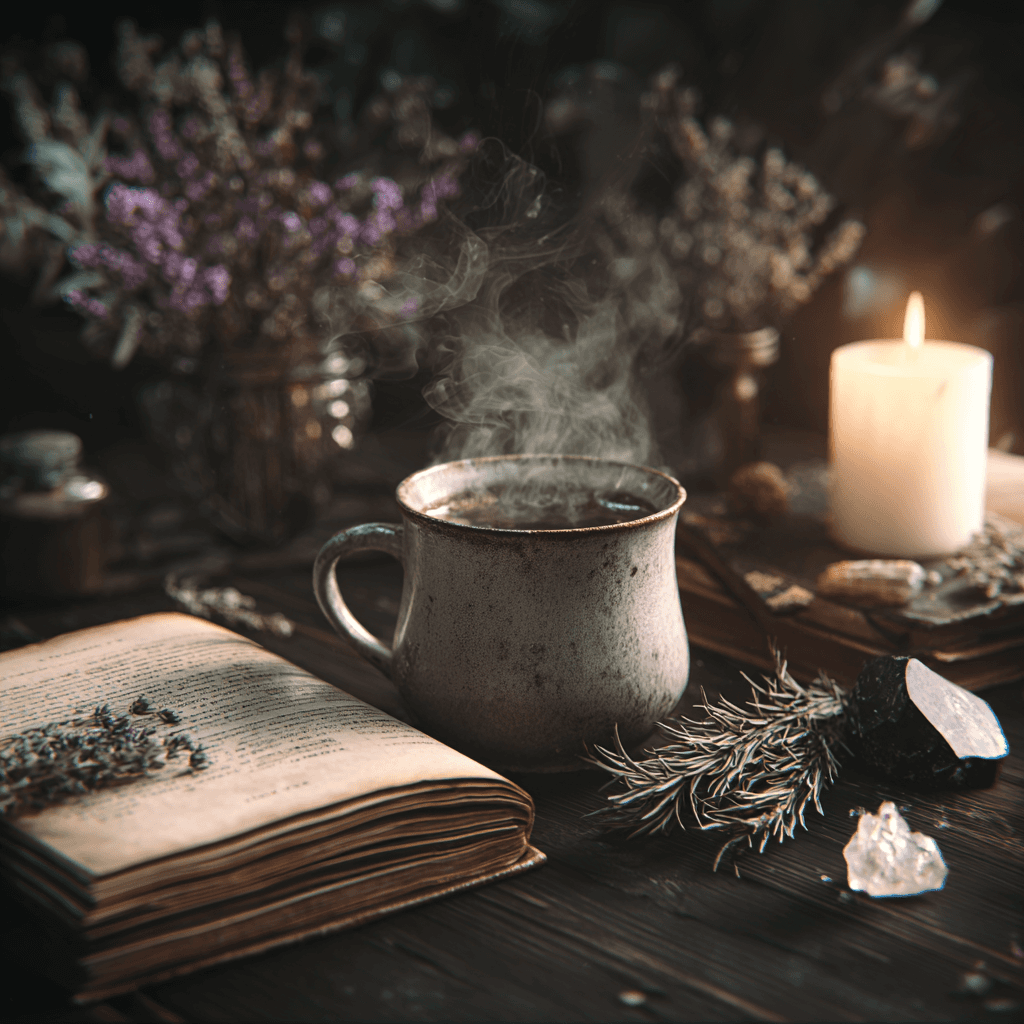
A Cooling Crystal Grid for Hot Summer Nights
Three stones, a simple layout, and five minutes of quiet. A crystal grid for when the heat won't let you sleep and your nervous system needs the reminder that calm is possible.

How to Build a Daily Witchy Practice in 10 Minutes
A real, sustainable daily practice for people with full lives. Ten minutes. Five elements. No altar required, no expensive tools, no perfection.

The Midsummer Fire Spell: A 4-Element Ritual for the Longest Day
A complete Litha ritual using the four elements — earth, water, air, and fire — for morning, noon, late afternoon, and sunset of the summer solstice.

A Sun-Charged Water Spell for the Longest Day
A simple, five-minute practice for the summer solstice. Charge a jar of water in the longest light of the year, then use it all summer long.
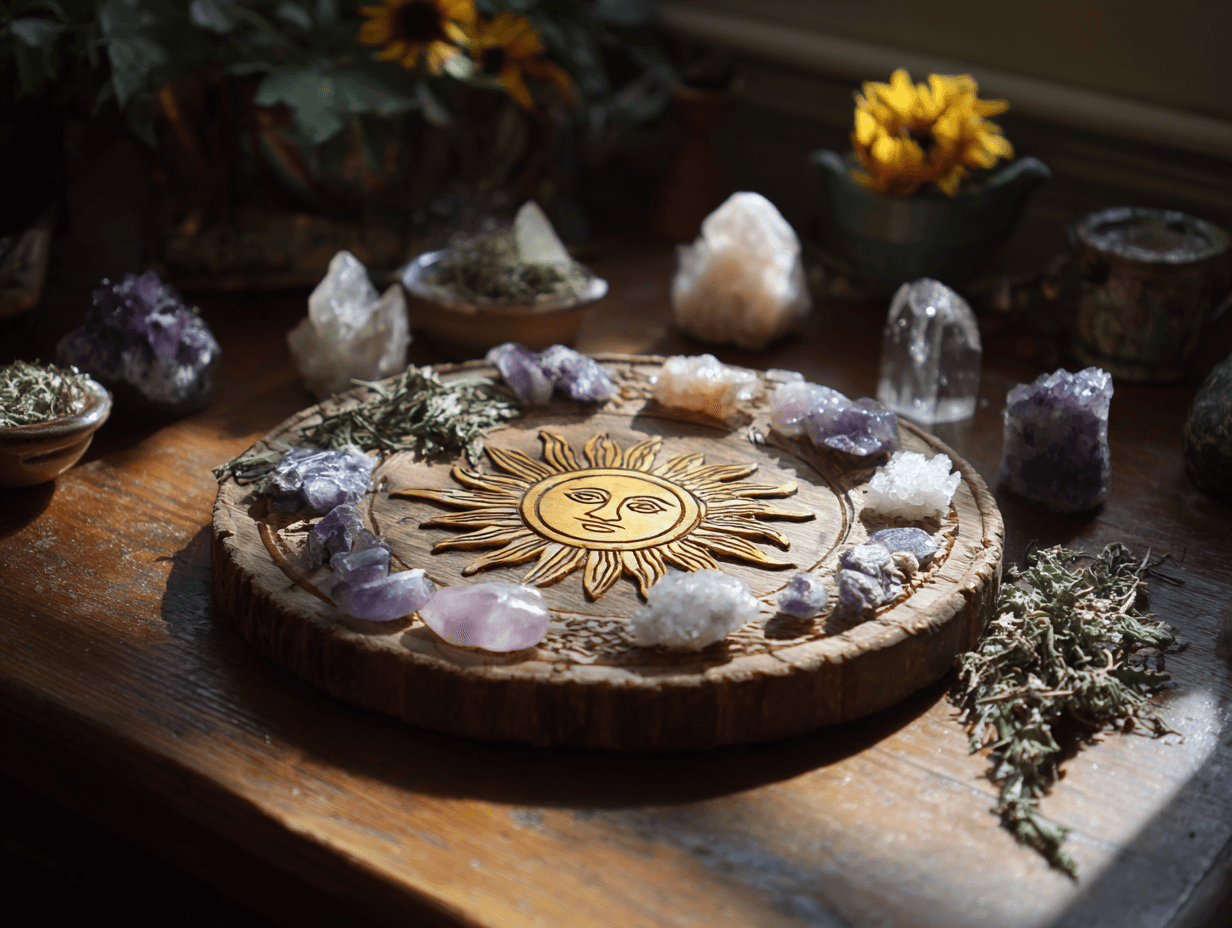
3 Herbs to Work With at the Summer Solstice
Three herbs that peak at midsummer, what they're for, and how to use them in the week of the longest day.
Wheel of the Year

Written by
Elyse